
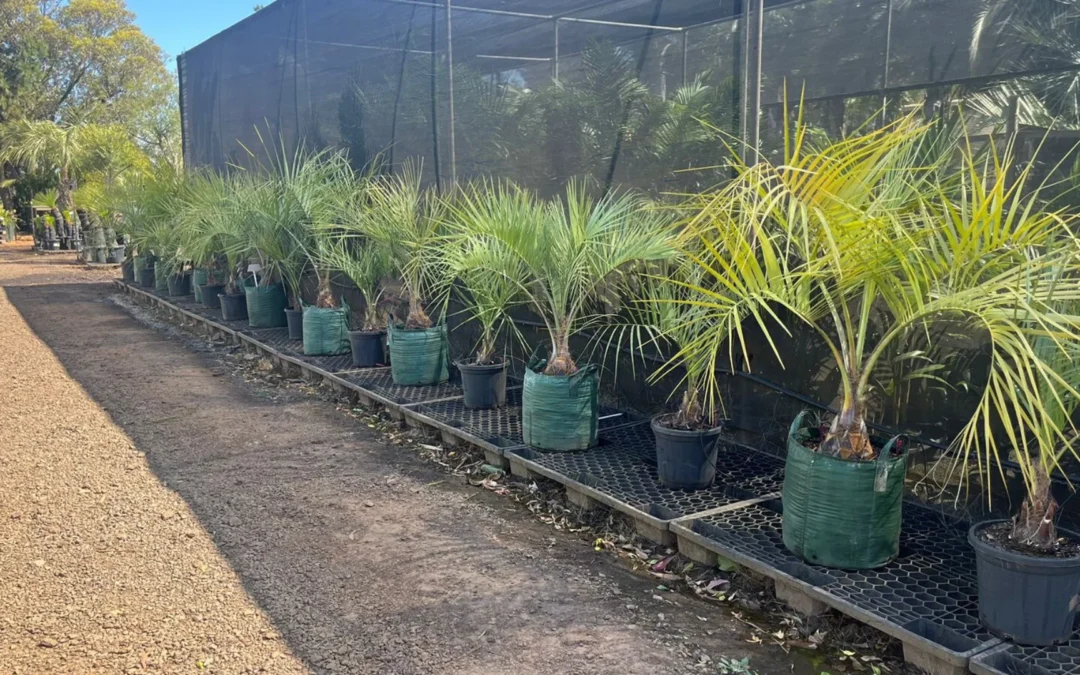
When starting a container garden, one of the first questions beginners ask is, “Can I grow a plant in a plastic container?” The short answer is yes, absolutely. Walk into any home and you will likely see houseplants thriving in plastic pots.
However, just because you can do something doesn’t mean it is the best option for the long-term health of your plants. In this article, we will break down the pros and cons of using plastic containers, how they affect plant biology, and what alternatives you might want to consider as you become a more experienced gardener.
The Appeal of Plastic Containers
It is easy to see why plastic pots dominate the gardening market. They offer several immediate benefits that appeal to both commercial growers and hobbyists:
- Lightweight and Convenient: Unlike heavy terracotta or ceramic pots, plastic is incredibly light. This makes it easy to move large plants around your patio or bring them indoors for the winter.
- Moisture Retention: Plastic walls are completely non-porous. This means water cannot evaporate through the sides of the pot. For plants that love constant moisture, like ferns or calatheas, this can reduce the frequency of watering.
- Affordability: Plastic is cheap to manufacture, making it the most budget-friendly option for outfitting an entire garden.
The Hidden Dangers to Root Health
Despite their convenience, growing plants in solid plastic containers comes with significant horticultural drawbacks. The issues usually occur beneath the soil surface, hidden from the gardener’s view until the plant begins to suffer.
1. The Threat of Overwatering and Root Rot
Because plastic does not breathe, the only way for water to escape is through the small drainage holes at the bottom. If the soil is heavy or the drainage holes get clogged, water pools at the bottom of the pot. This creates an anaerobic (oxygen-free) environment where roots suffocate and rot. Root rot is the number one killer of potted plants.
2. Root Circling (Being Root-Bound)
When a plant’s roots grow and hit the impenetrable wall of a plastic container, they have nowhere to go. They begin to circle around the inside of the pot, wrapping tightly around themselves. Over time, these circling roots will literally strangle the plant, preventing it from absorbing water and nutrients.
3. Thermal Shock
As mentioned in our other guides, plastic absorbs heat rapidly. A plastic pot left on a sunny patio can cause the soil temperature to spike dramatically, burning the fragile root hairs that are responsible for nutrient uptake.
A Healthier Alternative: Woven and Fabric Bags
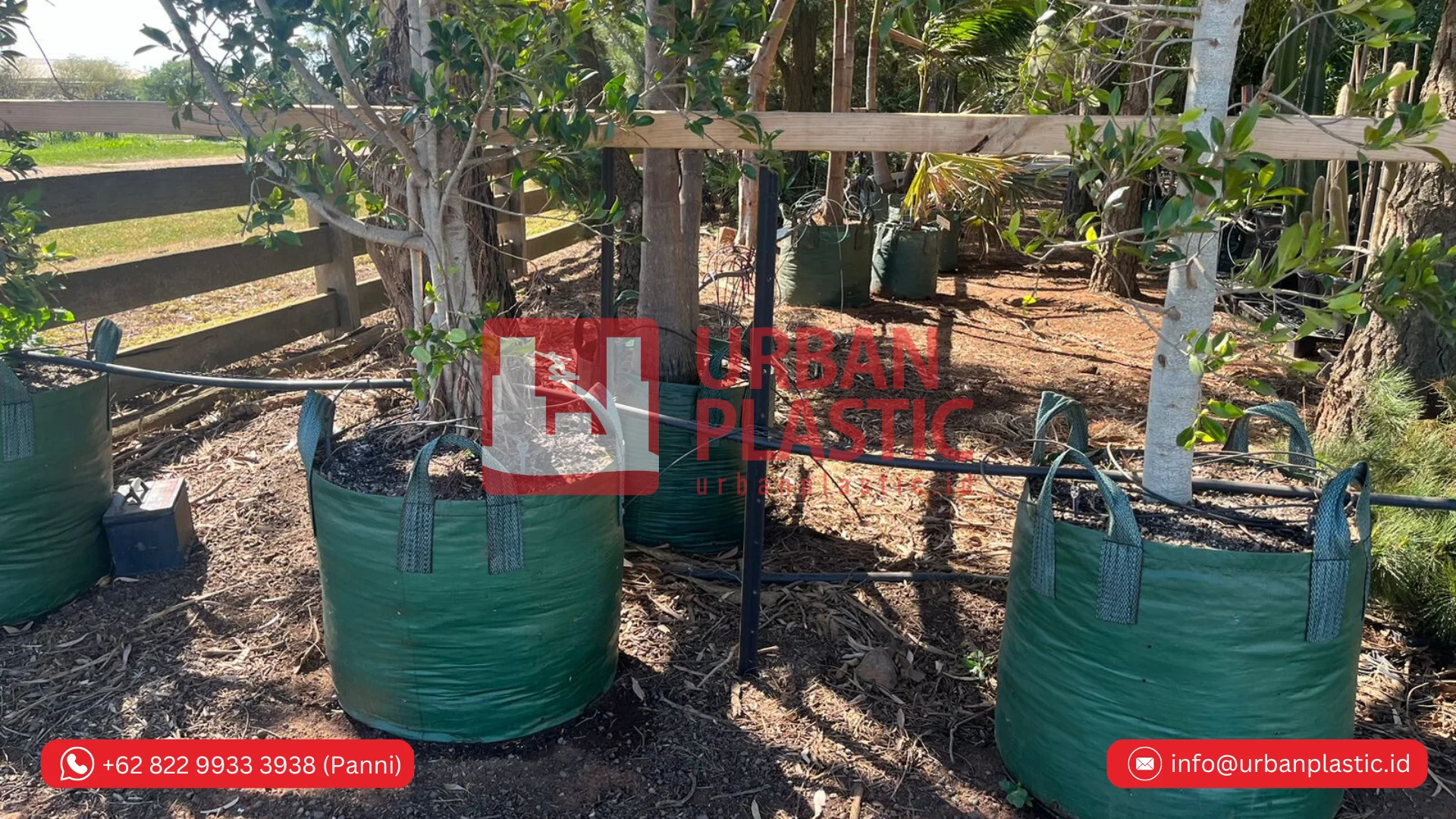
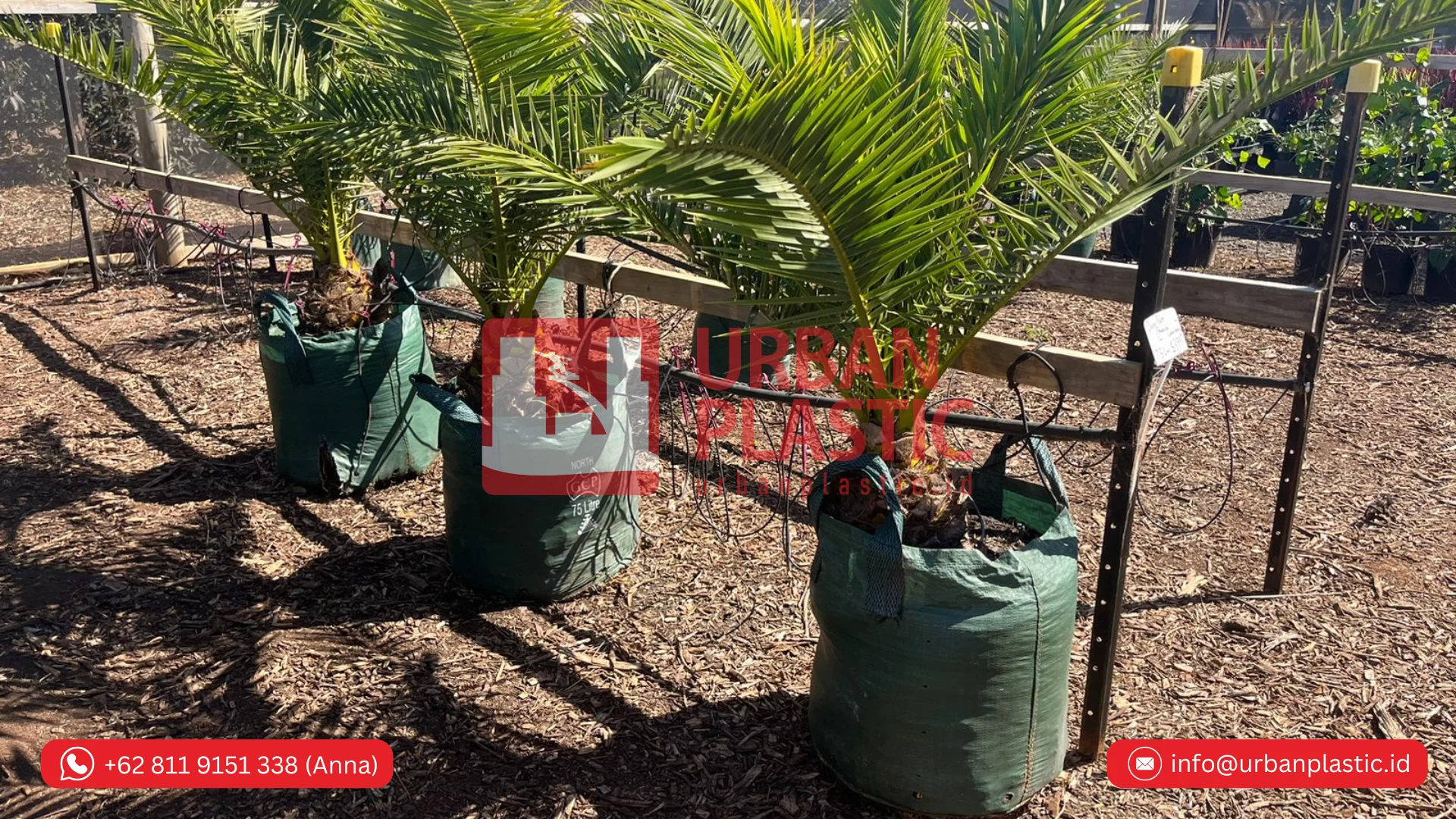
So, if plastic has so many drawbacks, what is the alternative? For outdoor gardening, urban farming, and patio displays, the modern solution is the woven planter bag.
Unlike solid plastic, these bags are porous. When roots hit the edge of a planter bag, they sense the air and naturally stop growing outward—a process called air pruning. Instead of circling, the plant is forced to grow new, fibrous feeder roots from the center. This results in a massive, highly efficient root system.
In conclusion, while you certainly can grow a plant in a plastic container, upgrading to a breathable woven bag will reward you with stronger roots, better drainage, and a much healthier, more vibrant plant.
For more information about Planter Bag please contact: Whatsapp/Mobile Phone: +62 822 9933 3938 (Ms. Panni) or Email : info@urbanplastic.id