
Ask ten gardeners which planter bag is best and you will get ten different answers, all of them correct.
The person growing basil on a windowsill, the one filling a rooftop with tomatoes, and the nursery moving hundreds of young trees are solving completely different problems. A bag that is ideal for one of them would be a poor choice for the others. So rather than naming a winner, it is more useful to work through the decisions that actually determine whether a bag suits your situation. There are about five of them, and once you have answered them the choice usually makes itself.
Why There Is No Single Best Planter Bag
The phrase best planter bag suggests there is one answer waiting to be found. In practice, four things change what counts as good.
What you are growing decides the depth and volume you need. Your climate decides whether breathability helps or hurts. Where the bag sits decides how much drainage matters and whether anything underneath needs protecting. And how long you need it to last decides how much material you should be paying for.
Get those four right and almost any decently made bag will work. Get them wrong and even an expensive bag will disappoint.
Start With What You Are Growing
Root depth is the first filter, because this is the one thing you cannot compensate for later.
Leafy greens and herbs keep their roots shallow. Lettuce, spinach, pak choi, basil and coriander are comfortable in around 15 to 20 centimetres of depth, which means small bags in the 5 to 10 litre range do the job. Mint is the exception worth noting, not for depth but because it will take over anything it shares a bag with, so give it one of its own.
Fruiting vegetables need noticeably more. Chillies, peppers, aubergines and bush tomatoes want around 25 to 30 centimetres of depth and somewhere in the 15 to 25 litre range. Indeterminate tomatoes, which keep growing all season, and cucumbers both want more again, usually 30 to 40 centimetres and 25 to 40 litres, plus something to climb.
Root crops are the most depth-hungry. Standard carrots want 25 to 30 centimetres of loose medium, and shallow bags produce short or forked roots. Potatoes need more still, generally 40 centimetres or more, because the crop depends on adding medium progressively as the plant grows.
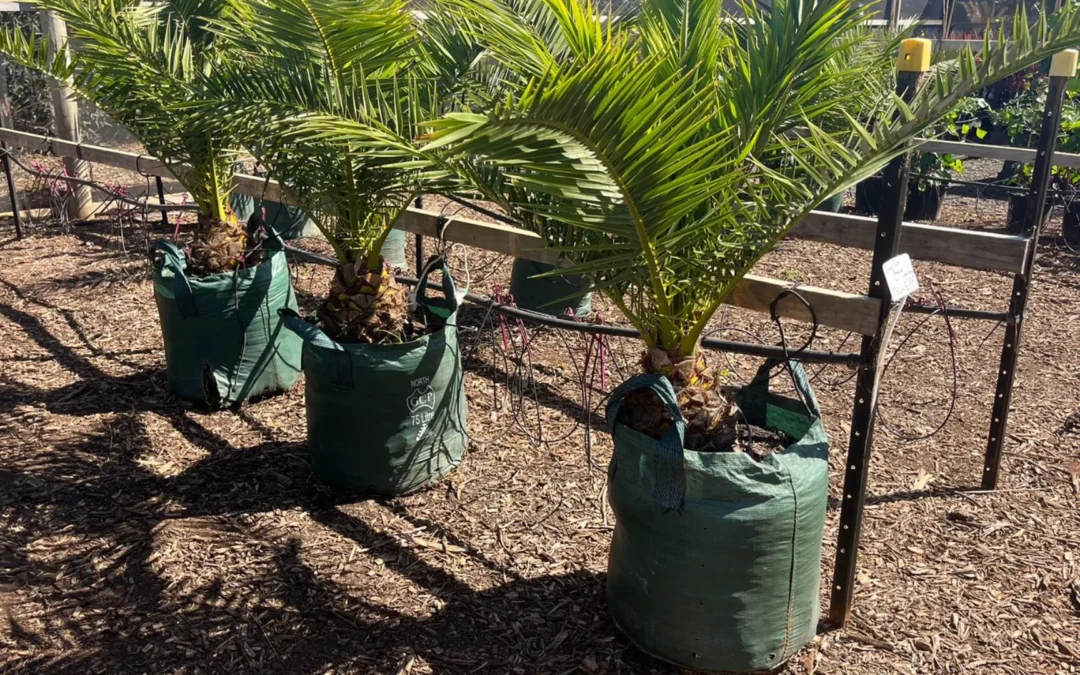
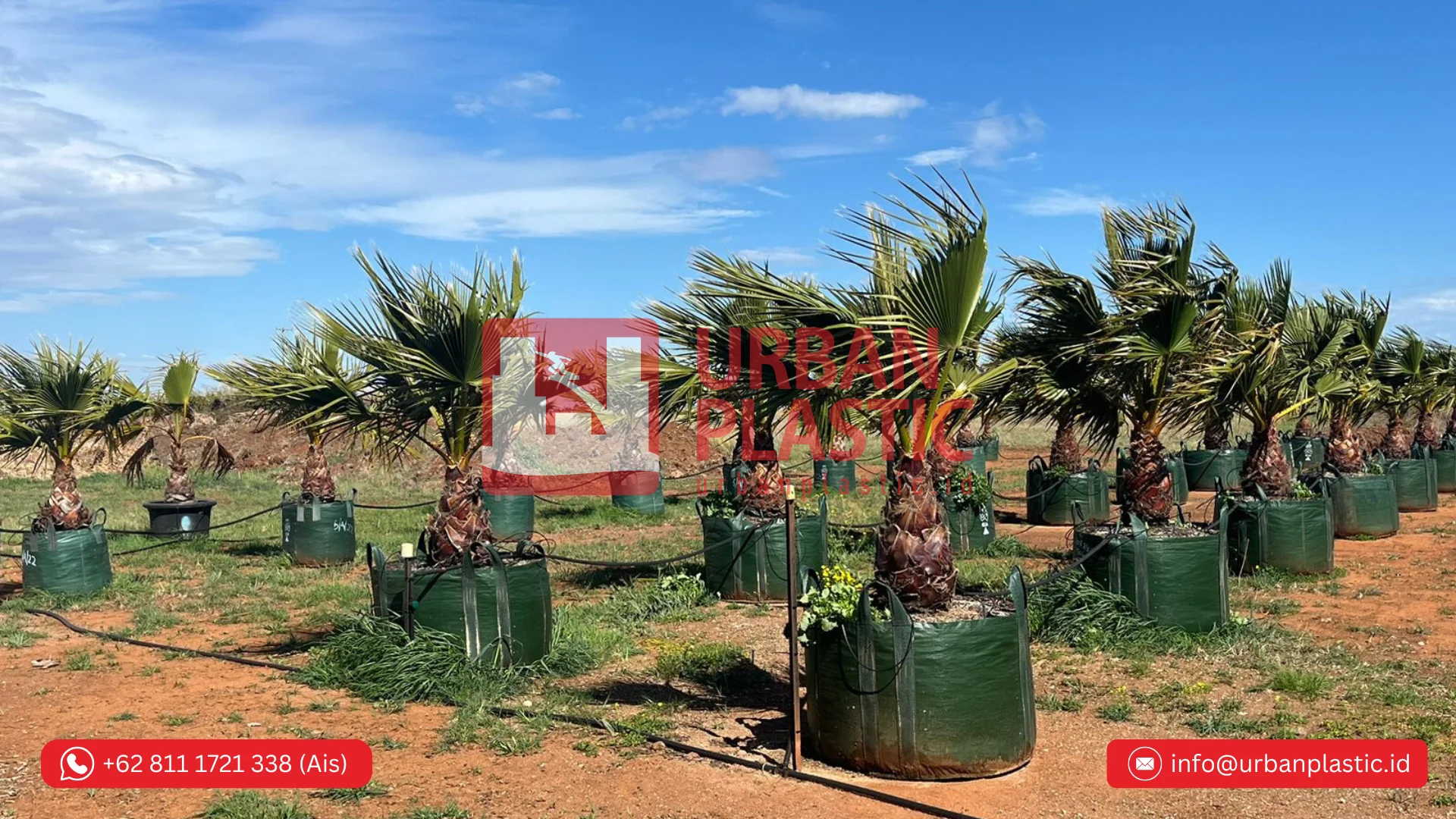
Shrubs and small trees need 45 centimetres or more and bags starting around 60 litres. Here the weight becomes a real factor, which brings us to handles later on.
As a general check, if the bag’s stated volume comes from being wide rather than deep, it may not suit a crop that roots downward.
Depth Matters More Than Width
This follows from the above but deserves stating plainly, because volume figures hide it.
Two bags can both hold 30 litres, one shallow and wide, the other narrower and deeper. For lettuce the wide one is better, since you get more surface area for more plants. For carrots or potatoes it is close to useless.
When comparing bags, look for the actual height, not just the litre rating. And remember that usable depth is less than the bag’s full height, since you leave space at the top for watering and the medium settles after a few waterings.
Fabric or Plastic? Your Climate Decides
Both materials are legitimate, and the right one depends mostly on how much water you have and how hot it gets.
Breathable Fabric
Non-woven fabric bags drain and breathe from every surface. Roots that reach the wall meet dry air and stop extending, branching instead into a denser network, which is the effect people call air pruning. Soil also runs cooler than in plastic under the same sun.
The trade-off is water use. A fabric bag dries out faster, so in a hot dry climate you will be watering more often.
Plastic Film Bags
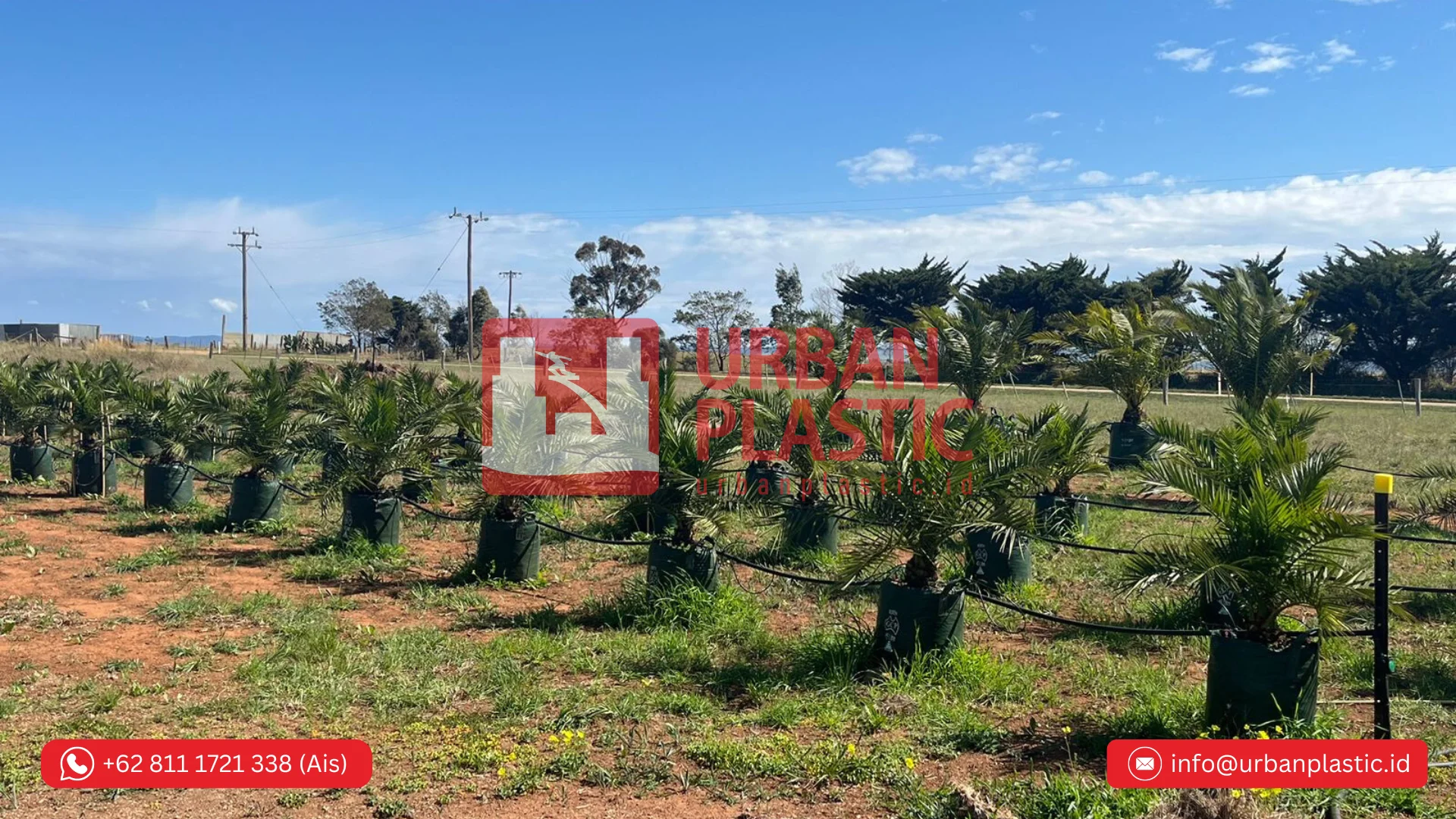
Plastic planter bags hold moisture far longer, which matters if water is expensive, scarce, or you cannot water daily. They are also the cheaper option and widely used in commercial nurseries for exactly that reason.
The trade-off is that drainage depends entirely on the holes you put in, and heat builds up more readily inside.
If you are weighing up fabric types in more detail, material construction and weight deserve a closer look than this section can give them.
Features That Actually Matter
Handles
Handles seem like a minor detail until you try to move a full 40 litre bag. Wet growing medium is heavy, and a bag that needs repositioning will be lifted by its handles repeatedly.
What to look for is how the handles attach. Stitched through reinforced layers holds. Stitched only onto the outer surface tears away, usually at the worst possible moment.
Drainage
Fabric bags drain across their whole surface, so there is nothing to check. Plastic bags need holes, and the position matters as much as the number. Holes only at the very base let the bottom few centimetres stay waterlogged, which is where root rot starts.
Shape and Base
A bag with a flat, reinforced base stands up on its own and stays where you put it. A bag without one slumps and leans, which looks untidy and makes watering awkward.
Square or rectangular bags use space more efficiently against a wall or in a row. Round bags are easier to turn and move.
Colour
Black is standard and resists sunlight well. Lighter colours reflect more heat, which can genuinely help in very hot climates by keeping root-zone temperature down. Some growers prefer lighter bags on rooftops for this reason.
How Long Do You Need It to Last?
This is where people most often overpay or underpay.
For a single season of salad greens, a lightweight bag is entirely reasonable. It will not survive years outdoors, but it does not need to.
For bags that stay outside permanently, under sun and rain, the thing that decides lifespan is UV stabilisation. Fabric without it becomes brittle and papery, and you can usually feel it before you see it. Heavier fabric with proper UV additives can serve several seasons.
So be honest about the use. Buying heavy duty bags for a seasonal herb garden is wasted money, and buying light bags for a permanent rooftop installation means replacing them annually.
Where the Bag Will Sit
Directly on Soil
The easiest situation. Water drains straight through into the ground, and fabric bags let roots interact a little with the soil beneath, which some growers like.
One thing to watch: bags sitting on bare soil for long periods can become a path for weeds and pests to move in from below.
On Concrete, Rooftops or Balconies
Here drainage becomes your problem rather than the ground’s. Water leaving the bag has nowhere to go and will sit underneath, staining surfaces, keeping the base permanently damp, and potentially affecting whatever waterproofing is below.
Raising bags slightly on feet or battens solves most of it. For larger permanent installations, a proper drainage layer underneath is worth considering.
Weight also matters on rooftops and balconies in a way it does not at ground level. Wet medium is considerably heavier than dry, and a row of large bags adds up quickly.
Signs of a Poorly Made Bag
Since the goal here is choosing well rather than choosing expensively, it helps to know what weak construction looks like.
Seams that fray or show loose, uneven stitching will open under load. The base seam is the one to inspect most closely, because that is where the weight concentrates.
Handles attached only to the outer layer, with no reinforcement visible, will pull away.
Fabric that sheds fibres when you rub it between your fingers, or feels papery rather than felt-like, is usually light and poorly bonded.
A listing that states no material and no weight is describing a category rather than a product. If a seller cannot tell you what the bag is made of, that is information in itself.
And a strong chemical smell on arrival is worth questioning, particularly for anything growing food.
The Best Planter Bag Is the One That Fits the Job
So what is the best planter bag? It is whichever one has the right depth for your crop, the right material for your climate, enough durability for how long you need it, and handles that will survive being used.
In practice that means a shallow wide bag for salad greens, something deeper for tomatoes and peppers, a tall bag for potatoes, and a heavy duty bag with solid handles for anything you will be moving while full.
If you are buying in quantity and unsure, the most useful thing you can do is request a sample and fill it the way you actually intend to use it. Lift it when wet, leave it in the sun for a few weeks, and see how it holds up. That tells you more than any specification sheet, and more than any article, including this one.
For more information about Planter Bag please contact: Whatsapp/Mobile Phone: +62 811 1721 338 (Ms. Ais) or Email : info@urbanplastic.id