
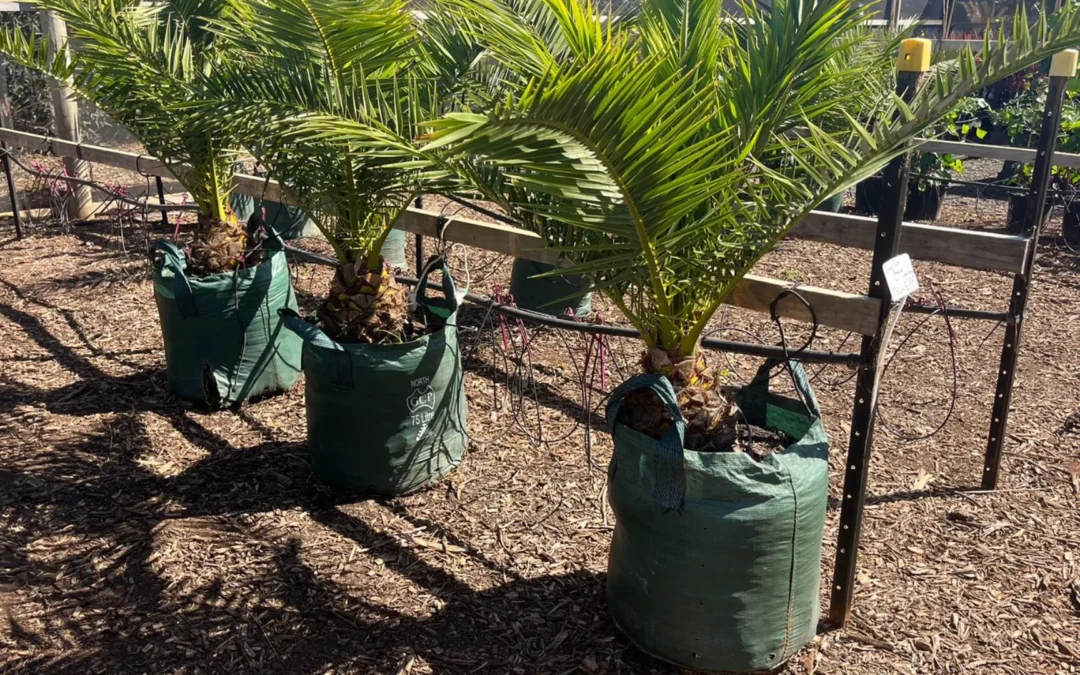
Potatoes are one of the few crops that genuinely prefer a bag to a garden bed. They need loose soil, room to form tubers above the seed piece, and a way to be harvested without slicing half the crop with a fork. A bag solves all three. You tip it over at the end of the season and the potatoes roll out. The catch is that most failed potato bags fail for the same three reasons: the bag was too shallow, the grower skipped hilling, or the plants were started at the wrong time of year. This guide covers all three.
Why Use a Grow Bag for Potatoes?
- Harvest without digging. No fork, no guessing, no damaged tubers. Empty the bag onto a tarp and sort.
- Better root conditions. Breathable fabric lets air reach the growing medium from every side, which keeps roots from circling and helps prevent the waterlogging that causes tuber rot.
- Cooler soil. Fabric releases heat that plastic traps. In warm regions this difference alone can decide whether tubers form at all.
- No soil-borne disease carryover. Fresh medium each season avoids the blight and scab that build up in the same garden bed year after year.
- Mobility. A bag can be moved into afternoon shade during a heat spell, something a garden bed cannot do.
Choosing the Right Grow Bag for Potatoes
Size and depth matter more here than for almost any other crop, because potatoes form tubers along the buried stem rather than only at the base.
- Volume. Around 40 liters (roughly 10 gallons) suits two to three seed potatoes. For four or five plants, move up to 60 to 75 liters. Crowding is the most common cause of a bag full of marble-sized potatoes.
- Depth. Aim for at least 40 cm of usable depth. You will start with only 10 to 15 cm of medium at the bottom and add more as the plant grows, so a shallow bag leaves no room for that process.
- Fabric. Non-woven breathable fabric is the standard choice. It drains freely and keeps the medium cooler than plastic. For repeat seasons, look for UV-stabilized material in the 260 to 300 GSM range.
- Handles. A full potato bag is heavy. Reinforced handles are not a luxury once you need to move it.
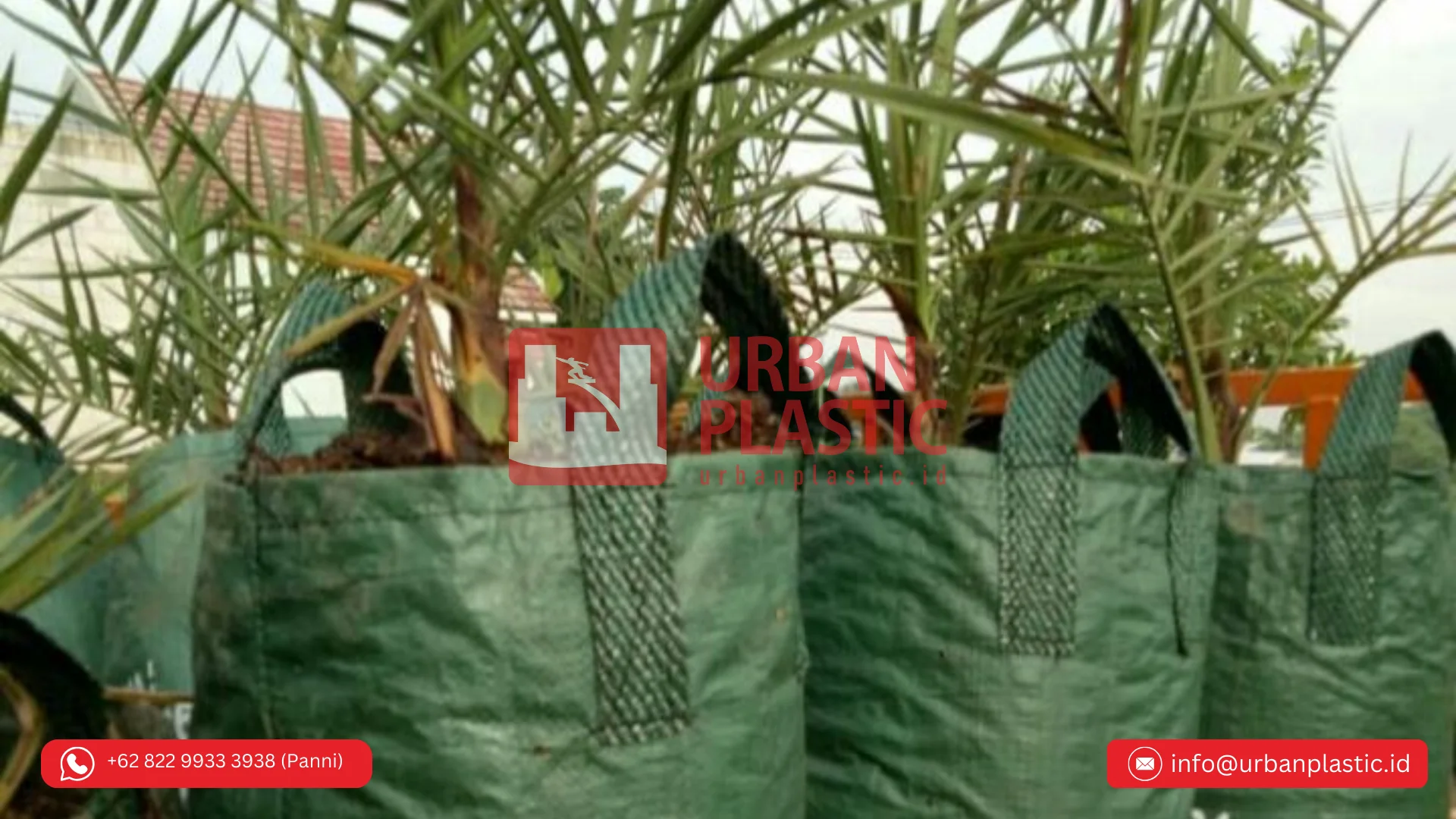
Step by Step: Growing Potatoes in Bags
1. Prepare the Seed Potatoes
Use certified seed potatoes rather than supermarket ones, which are often treated to suppress sprouting. Set them in a bright, cool spot for two to three weeks until short green sprouts appear, around 1 to 2 cm long. This is called chitting, and it gives the crop a head start. Potatoes larger than an egg can be cut into pieces, each with at least two sprouts. Let the cut surfaces dry for a day or two before planting so they do not rot in the soil.
2. Fill the Bag Partially
Roll the sides of the bag down to about a third of its height. This lets sunlight reach the young plants and makes the next steps easier. Add 10 to 15 cm of growing medium. Potatoes need it loose: a mix of compost with cocopeat or peat, plus perlite or coarse sand for structure, works well. Heavy garden soil compacts and produces misshapen tubers.
3. Plant
Place the seed potatoes on the medium with sprouts facing up, spaced evenly and not touching the bag wall. Cover with another 10 cm of medium and water gently.
4. Hill as the Plants Grow
This is the step most people skip, and it is where most of the yield comes from. Once shoots reach about 15 to 20 cm, add enough medium to bury the lower half of the stems, leaving the top leaves exposed. Unroll the bag sides as you go. Repeat every two to three weeks until the medium reaches about 5 cm below the rim. Each buried section of stem becomes another zone where tubers can form.
5. Water and Feed
Keep the medium consistently moist but never saturated. The critical period is from flowering onward, when tubers are actively sizing up. Inconsistent watering at this stage causes hollow centers and cracked tubers. Feed with a balanced fertilizer early on, then shift to one higher in potassium once flowering begins. Too much nitrogen late in the season produces lush foliage and disappointing tubers.
6. Harvest
For new potatoes, harvest about two to three weeks after flowering. For fully mature potatoes, wait until the foliage yellows and dies back, then stop watering for one to two weeks so the skins firm up. Tip the bag onto a tarp and sort by hand. Expect roughly 1 to 2 kg per plant under good conditions.
Potato Grow Bags Dubai and Other Hot Climates
Everything above applies, but in the Gulf one factor overrides all the others: timing. Potatoes stop forming tubers when soil temperatures climb too high. Plants may look perfectly healthy through a hot spell and still produce almost nothing underground, because the energy goes into foliage instead of tubers.
Plant in the cool season. In Dubai and the wider UAE, the practical window runs from around October to December, with harvest from January through March. Attempting a summer crop is not a matter of extra care, it simply will not produce.
Keep the medium cool. This is where potato grow bags outperform containers in hot regions. Breathable fabric sheds heat instead of storing it. Lighter colored fabric reflects more sunlight than black, and raising the bag off hot paving prevents heat conducting up through the base.
Manage afternoon sun. Morning sun with afternoon shade is usually better than full exposure once temperatures climb. Being able to move the bag is a genuine advantage here.
Water more often, not more heavily. In dry heat, evaporation is rapid. Two lighter waterings a day often work better than one heavy soak, which can push medium to saturation at the base while the top stays dry.
Mulch the surface. A layer of straw or coarse compost on top reduces evaporation and keeps the upper medium from overheating.
Common Mistakes
- Using a bag that is too shallow. Without depth, there is nowhere to hill, and hilling is where most of the crop comes from.
- Planting too many seed potatoes. More plants in one bag does not mean more harvest. It usually means the same total weight split into smaller, less useful potatoes.
- Filling the bag completely at planting. Potatoes need to be buried progressively, not all at once.
- Letting the medium dry out during flowering. This is the single most damaging timing error for yield and quality.
- Using dense garden soil. Compacted medium produces knobbly, deformed tubers and holds water where it should drain.
Conclusion
Growing potatoes in bags is straightforward once the three fundamentals are respected: enough depth, consistent hilling, and steady moisture during tuber formation.
Choosing the right grow bag for potatoes matters more than most people expect. Forty liters and 40 cm of depth is a reasonable starting point for a home crop, and breathable fabric makes a measurable difference where summers are hot. In climates like Dubai, timing is not one factor among many, it is the deciding one. Plant into the cool season, keep the medium from overheating, and the same varieties that fail in June will produce well in January.
FAQ
What size grow bag is best for potatoes?
Around 40 liters with at least 40 cm of depth works well for two to three seed potatoes. Larger bags of 60 to 75 liters suit four to five plants. Depth matters more than width because tubers form along the buried stem.
How many seed potatoes can I plant in one bag?
Two to three in a 40 liter bag. Planting more tends to reduce the size of individual potatoes rather than increase total yield.
When should I plant potatoes in Dubai?
The practical planting window runs from around October to December, with harvest between January and March. Summer soil temperatures in the UAE are too high for tubers to form.
Do I really need to hill potatoes in a grow bag?
Yes. Tubers form along the buried portion of the stem, so progressively adding medium as the plant grows is what produces a full bag rather than a handful of potatoes at the base.
How do I know when potatoes are ready to harvest?
For new potatoes, harvest two to three weeks after flowering. For mature potatoes, wait until the foliage yellows and dies back, then withhold water for one to two weeks before tipping the bag out.
For more information about Planter Bag please contact: Whatsapp/Mobile Phone: +62 822 9933 3938 (Ms. Panni) or Email : info@urbanplastic.id