
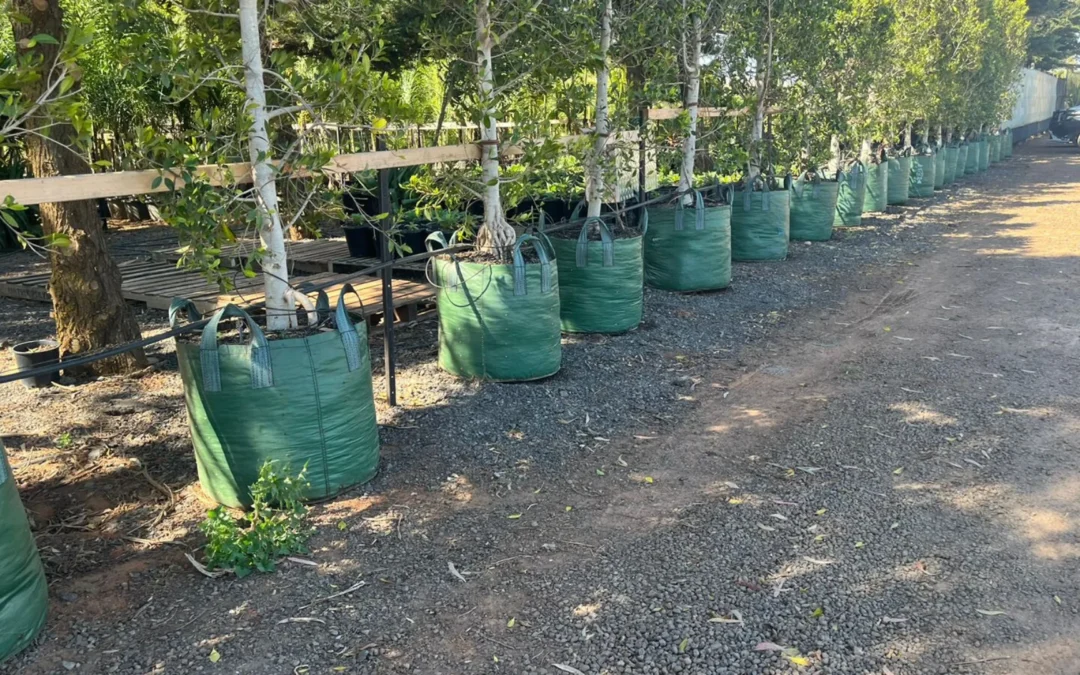
Plants that look fine in the morning and wilt by noon, even though the medium is still damp, are telling you something specific. The problem is not water. It is temperature, and it is happening below the surface.
Grow bags do get too hot in extreme climates. Understanding why matters, because several of the obvious fixes make it worse.
The Problem Is the Root Zone, Not the Leaves
Plants tolerate heat above ground far better than below it. Leaves transpire, which cools them. Roots have no equivalent mechanism.
Many crops show root stress once the medium stays above roughly 35°C, and root function drops sharply beyond that. Air temperature in a desert summer routinely exceeds that figure, and a dark container in direct sun runs hotter still.
Why Containers Heat Up Faster Than Open Ground
Soil in the ground is a huge thermal mass, so the temperature a few centimetres down barely moves across a day. A grow bag has none of that. The volume is small, almost all of it within a few centimetres of a wall exposed to sun and hot air, and there is nowhere for the heat to go. The smaller the bag, the more extreme this becomes.
The Sun-Facing Side Fails First
Damage is rarely even. The side facing the afternoon sun gets dramatically hotter, so roots along that wall die back while the rest of the root ball stays healthy. The plant shows general decline rather than anything specific, which is why this gets misdiagnosed as a watering or feeding problem. Turning bags occasionally spreads the exposure, though it is a workaround rather than a fix.
Fabric or Solid Plastic in Extreme Heat
This surprises people, because fabric grow bags for desert climate use carry a genuine advantage and a genuine disadvantage at once.
Water moving through the fabric wall evaporates from the outer surface, and evaporation removes heat. A damp fabric bag runs cooler than a solid plastic pot in the same sun, which is a real benefit when temperatures are extreme.
The catch is that the same process dries the medium far faster. In low humidity with constant sun, a fabric bag can go from well-watered to critically dry in a day, and once dry the cooling disappears exactly when it is needed most.
So neither wins outright. Fabric runs cooler but demands reliable, frequent irrigation. Solid plastic holds moisture longer but heats up more with no evaporative relief. In practice, fabric grow bags for desert climate use work best paired with a drip system, and are the riskier choice without one.
What Actually Reduces Heat
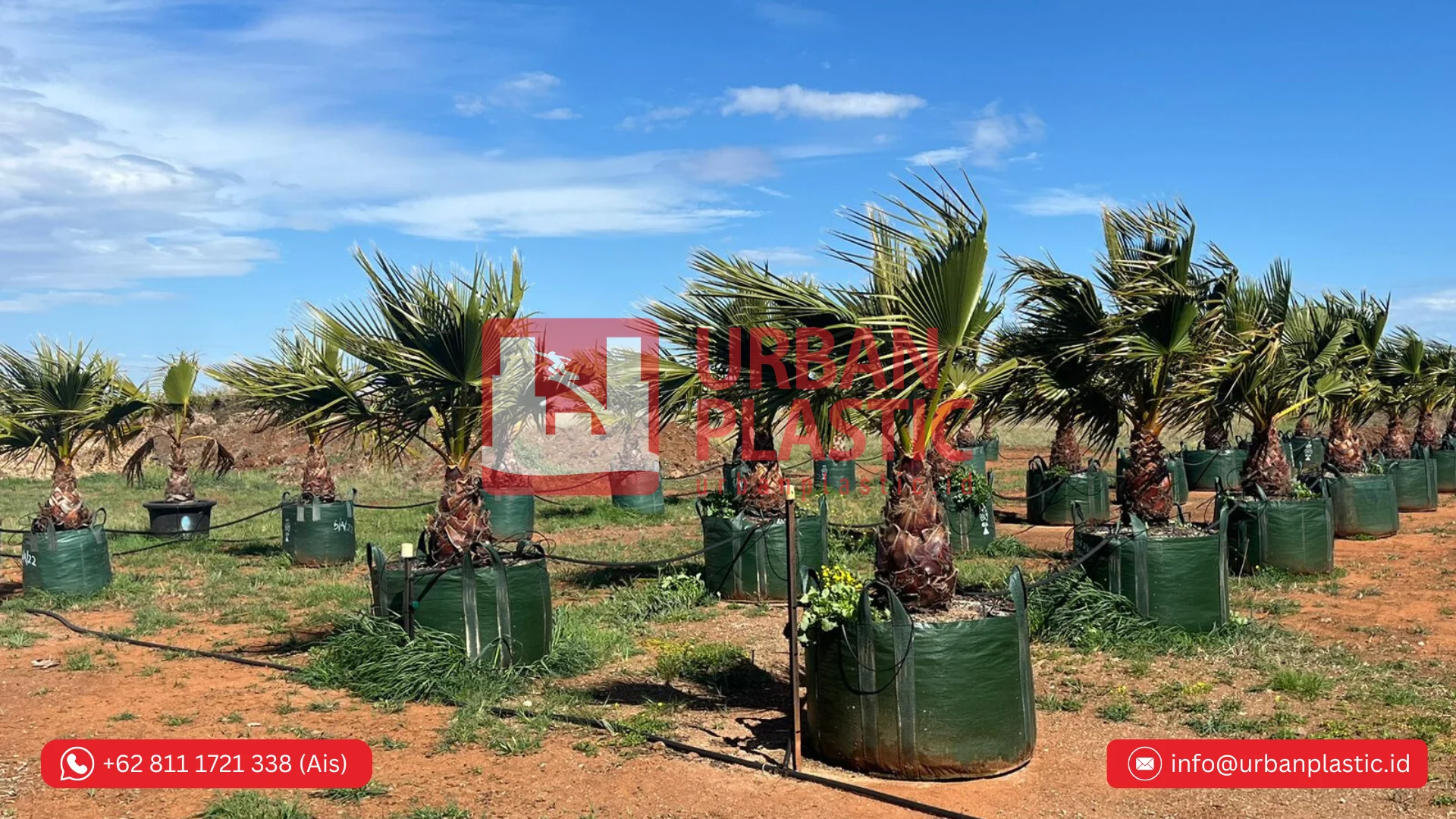
Four changes make a measurable difference to fabric grow bags for desert climate growing, and none is complicated.
Choose a Lighter Colour
Black absorbs nearly all the light hitting it and converts it to heat. In mild climates that is welcome because it warms the root zone early in the season. In a desert summer it works against you.
Tan, grey, beige or natural undyed fabric reflects more and runs cooler. For anyone comparing the best grow bags for hot weather UAE conditions, colour is the simplest variable to change and one of the most effective.
Go Larger Than You Would Elsewhere
Volume is thermal mass. A larger bag holds more medium and more water, so its temperature rises more slowly and peaks lower than a small bag.
A size that works well in a temperate garden can be the wrong choice in a desert one. Moving up a size or two buys both heat buffering and drought margin for very little extra cost.
Get the Bags Off Hot Paving
Concrete, tiles and gravel store heat all day and radiate it upward into the evening, so a bag on hot paving is heated from below as well as the sides long after the sun has moved off it. Raising bags on a slatted bench or pallet removes an entire heat source.
Shade the Container, Not Just the Plant
Most shading goes above the canopy, protecting the leaves while leaving the bags in full sun.
Low shade cloth along the sun-facing side, or grouping bags close enough to shade each other, targets the part actually overheating. Mulching the surface of the medium helps too, cutting evaporation and direct heating at once. For anyone buying the best grow bags for hot weather UAE summers, shading at bag level is worth planning before the bags arrive.
Watering Under Desert Conditions
Frequency matters more than volume. Several shorter irrigations keep the medium evenly moist, and that moisture sustains the evaporative cooling. Drip irrigation on a timer is close to essential at this level of heat.
One practical warning: water standing in a hose in the sun can come out hot enough to damage roots. Run it out before it reaches the plants.
The Salt Problem Nobody Mentions
This issue quietly ruins container growing in arid regions, and it follows directly from the heat.
Every irrigation brings dissolved salts. Water evaporates or is taken up by the plant; the salts stay behind. With high evaporation and irrigation water that is often already saline, they concentrate in the root zone far faster than in a temperate climate.
Symptoms look like drought or nutrient burn — scorched leaf margins, stunted growth, wilting despite moist medium — and watering more makes it worse. Fabric bags show it first as a white crust on the outside, where salts accumulate as moisture evaporates through the wall.
The remedy is periodic heavy leaching: irrigate well beyond runoff so water carries the salts out of the bottom. Doing this on a schedule rather than waiting for symptoms keeps containers productive through a long hot season.
Heat Is Manageable, but Only If You Plan for It
Grow bags genuinely do get too hot in desert conditions, and the root zone pays the price before anything shows above the medium.
What helps is a stack of small decisions rather than one product choice. Lighter colour instead of black. A larger size than you would use in a mild climate. Bags lifted off hot paving and shaded at their own level. Drip irrigation rather than occasional soaking. And a regular leaching schedule.
Anyone shortlisting the best grow bags for hot weather UAE growing should weigh those five alongside the product itself. Choose fabric for its evaporative cooling if your irrigation is reliable; if it is not, the breathability that helps in theory is what dries plants out by midday.
For more information about Planter Bag please contact: Whatsapp/Mobile Phone: +62 811 1721 338 (Ms. Ais) or Email : info@urbanplastic.id